The global skincare industry is entering a new phase. Consumers are no longer satisfied with products that only provide temporary glow or superficial hydration. Instead, they are actively seeking functional skincare solutions that deliver visible, long-term skin improvement while supporting overall skin health.
This shift is driving rapid growth in procedural skincare, regenerative beauty, and advanced ingredient delivery systems. Among the emerging technologies leading this transformation, spicules have become one of the most discussed innovations in the skincare industry.
Originally popularized through K-beauty treatments, spicules are now expanding into global skincare markets as brands search for non-invasive alternatives to professional microneedling and more effective ways to enhance ingredient absorption.
For skincare brands, OEM manufacturers, salons, and aesthetic professionals, spicules are no longer just a trend ingredient — they are becoming a key technology platform for the next generation of high-performance skincare.
The New Era of Functional & Procedural Skincare
Over the past decade, skincare trends have evolved rapidly. Early consumer demand focused heavily on instant glow, exfoliation, and aggressive resurfacing. However, modern consumers are becoming increasingly educated about skin barrier health, inflammation, and long-term skin resilience.
As a result, the industry is moving toward a new category often referred to as procedural skincare — products inspired by professional aesthetic treatments but designed for safer and more convenient home use.
Several major market shifts are driving this movement:
- Growing interest in clinic-inspired skincare
- Rising popularity of at-home aesthetic treatments
- Increased demand for high-performance active ingredients
- Consumer preference for non-invasive skincare technologies
- Strong focus on skin longevity and preventative skincare
Today’s consumers want products that can improve skin texture, support collagen production, enhance absorption, and deliver visible results without requiring invasive procedures or extended downtime.
This is exactly where spicule technology is gaining attention.
What Are Spicules?
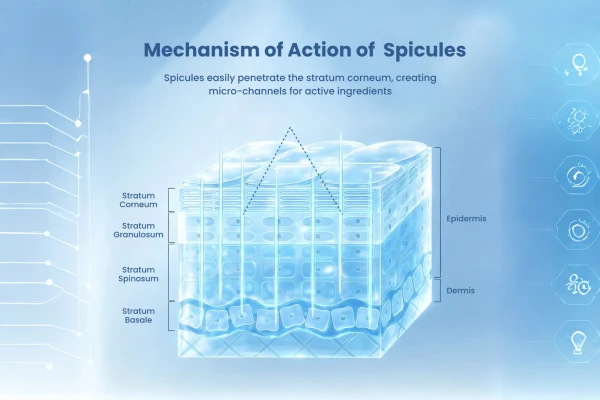
Spicules are microscopic needle-like structures naturally derived from freshwater or marine sponges. These micro-sized silica structures create a temporary stimulation effect on the skin surface, helping support skin renewal and improve the delivery efficiency of active ingredients.
In skincare formulations, spicules are often described as a “microneedling-like” technology because they can provide a similar sensation and functional mechanism without using professional microneedling devices.
Unlike traditional exfoliating ingredients that mainly work on the skin surface, spicules help create micro pathways that may enhance the penetration of active ingredients into the skin.
This makes them highly attractive for formulations focused on:
- Skin texture refinement
- Brightening treatments
- Anti-aging products
- Post-acne skincare
- Professional salon treatments
- Advanced home-care systems
As consumer demand grows for more effective skincare solutions, spicules are increasingly being integrated into serums, ampoules, creams, and professional treatment programs.
Why Spicules Are Becoming a Key Skincare Technology
Several factors are contributing to the rapid growth of spicule skincare worldwide.
1. The Global Influence of K-Beauty
K-beauty continues to influence global skincare innovation, especially in the categories of skin renewal, glow-enhancing treatments, and advanced delivery systems.
Spicule-based skincare gained early popularity in Korea through professional salon treatments before expanding into consumer retail products. As Korean beauty trends spread globally through TikTok, Instagram, and beauty influencers, spicule skincare quickly attracted international attention.
Consumers are increasingly searching for products that can deliver “glass skin” results while also improving skin quality over time. Spicules fit naturally into this demand.
2. Demand for Non-Invasive Alternatives
Professional microneedling treatments can produce effective results, but they often require equipment, recovery time, and professional supervision.
Many consumers are now looking for gentler alternatives that can be integrated into home skincare routines. Spicules offer an attractive balance between performance and convenience, making them appealing to both skincare brands and consumers.
This “professional-inspired homecare” category is expected to continue expanding in the coming years.
3. Enhanced Active Ingredient Delivery
One of the biggest challenges in skincare formulation is improving the effectiveness of active ingredients.
Consumers increasingly expect products containing ingredients like peptides, PDRN, exosomes, niacinamide, and centella asiatica to deliver visible results. Spicules help support these formulations by enhancing product absorption and skin interaction.
As brands continue developing high-performance skincare products, delivery systems are becoming just as important as the active ingredients themselves.
4. The Shift Toward Regenerative Skincare
Modern skincare trends are increasingly focused on skin regeneration rather than aggressive correction.
Consumers now prioritize:
- Skin barrier support
- Long-term skin health
- Prevention-focused skincare
- Reduced irritation
- Sustainable skin improvement
Spicules align with this movement because they can be integrated into formulations designed for skin renewal and rejuvenation without relying solely on harsh exfoliation methods.
The Market Opportunity for Skincare Brands
The commercial potential of spicule skincare is expanding rapidly across both professional and retail markets.
Premium Product Positioning
Spicule products are often positioned as premium skincare solutions due to their advanced technology and treatment-inspired benefits. This creates strong opportunities for brands seeking higher-value product categories.
Products featuring spicules are commonly marketed within:
- Professional skincare lines
- Medical-inspired skincare
- Advanced anti-aging collections
- Intensive treatment systems
- Salon-exclusive products
This premium positioning also supports stronger brand differentiation in a highly competitive skincare market.
Growth in Salon & Homecare Integration
Another major trend is the integration of salon treatments with homecare routines.
Consumers increasingly want professional-level skincare experiences at home. Brands are responding by creating treatment systems that combine:
- In-clinic procedures
- Post-treatment skincare
- Maintenance homecare products
Spicules work particularly well within this ecosystem because they bridge the gap between professional aesthetics and daily skincare.
Rising Consumer Awareness
Social media platforms have significantly accelerated consumer awareness of advanced skincare technologies.
TikTok and beauty influencers have played a major role in introducing consumers to:
- Microneedling-inspired skincare
- Skin cycling routines
- Advanced active ingredients
- Professional-grade skincare concepts
As awareness continues growing, spicules are likely to become a mainstream ingredient category rather than a niche trend.
The Future of Spicule Skincare
The future of skincare is moving toward smarter, more personalized, and more functional solutions. Spicules are expected to play an increasingly important role in this transformation.
Several future directions are already emerging:
Combination Technologies
Spicules are increasingly being paired with advanced active ingredients such as:
- Exosomes
- PDRN
- Peptides
- Growth factors
- Beta-glucan
These combinations aim to create more comprehensive skin renewal systems.
Personalized Functional Skincare
As skincare personalization continues growing, brands may begin developing customized spicule formulations based on:
- Skin sensitivity
- Treatment intensity
- Skin condition
- Professional versus home use
Expansion Beyond K-Beauty
Although spicules originated within the Korean beauty industry, global demand is expanding rapidly across Europe, North America, Southeast Asia, and the Middle East.
More international brands are now exploring spicule-based formulations as they seek innovative technologies that differentiate their product lines.
Why Ingredient Quality Matters
As the spicule market expands, ingredient quality and manufacturing standards are becoming increasingly important.
Key factors influencing formulation performance include:
- Purity levels
- Particle consistency
- Processing technology
- Safety testing
- Stable supply capability
For skincare brands, choosing a reliable spicule supplier is essential for ensuring product safety, formulation stability, and consistent consumer experience.
Manufacturers with strong purification systems, controlled particle processing, and professional formulation support will play a critical role in the future development of the spicule skincare industry.
The skincare industry is entering a new era centered around functional performance, regenerative beauty, and professional-inspired homecare.
Spicules are emerging as one of the most important technologies supporting this transformation. By combining enhanced delivery performance with non-invasive skin stimulation, spicules offer skincare brands new opportunities to develop highly differentiated products for modern consumers.
What began as a niche K-beauty innovation is rapidly evolving into a global skincare category.
As demand for advanced skincare solutions continues to grow, spicule technology is expected to become a key part of the next generation of high-performance skincare products.