
Enzyme-Based
Spicule Refinement Technology
Proprietary enzymatic treatment maximizes spicule bioactive components retention
to yield 99% high-purity raw material.
to yield 99% high-purity raw material.
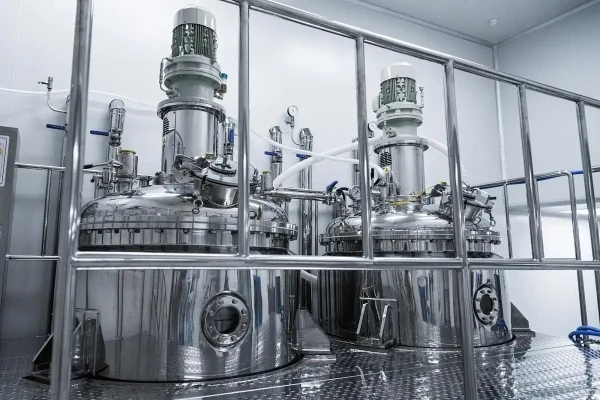
— WHY ENZYME TREAMENT
Chemical Extraction vs Enzymatic Treatment
Chemical extraction causes solvent residue, while BS LAB’s enzymatic treatment completely solves this issue.
- Zero Residue: Bio-extraction for long-lasting formulation stability
- High Purity: 23-step refining, 99%+ purity raw materials
- Consistency: Standard enzymatic process for consistent batch quality
Enzymatic Extraction Process
Fully compliant with ISO standards.
01.
Raw Material Selection
Carefully select sponges from clean water bodies.
02.
Material Pre-treatment
Break sponges into uniform fine fragments.
03.
Enzymatic Fermentation
Fermentation with carefully selected strains to achieve complete enzymatic hydrolysis.
04.
Multi-stage Purification
Multiple precision washing, screening and graded filtration are applied to remove impurities.
05.
Drying & Sterilization
48 h low-temperature drying, followed by moist heat sterilization at 121°C for 30 min.
06.
Quality Inspection & Packaging
Carry out quality testing per standards and package as required.
Chemical Extraction vs. Enzyme Treatment
BS LAB uses natural enzyme enzyme treatment instead of harmful chemical solvents for extraction
| Comparison Item | Conventional Chemical Extraction (HCl) | BS LAB Enzyme Treatment |
|---|---|---|
| Solvent | ✕ Strong acids such as hydrochloric acid (HCl) | ✓ Natural enzyme culture medium |
| Active Components | ✕ 30%+ loss from thermal decomposition | ✓ 99% component retention |
| Residual Solvent | ✕ Residuals exist, affecting formulation stability and safety | ✓ No residuals (ND), long-term formulation stability |
| Environment | ✕ Hazardous wastewater generation | ✓ Zero chemical solvents, eco-friendly |
| Purity | ✕ 85~95% | ✓ 99% or higher |