
What is
Sponge Spicule?
Sponge spicule (Hydrolyzed Sponge) is extracted from a unique freshwater sponge. These fine siliceous needle structures build the sponge skeleton. Chemical formula: SiO₂·nH₂O; length: 100–320 μm, diameter: 10–15 μm.
1. What is Sponge Spicule ?
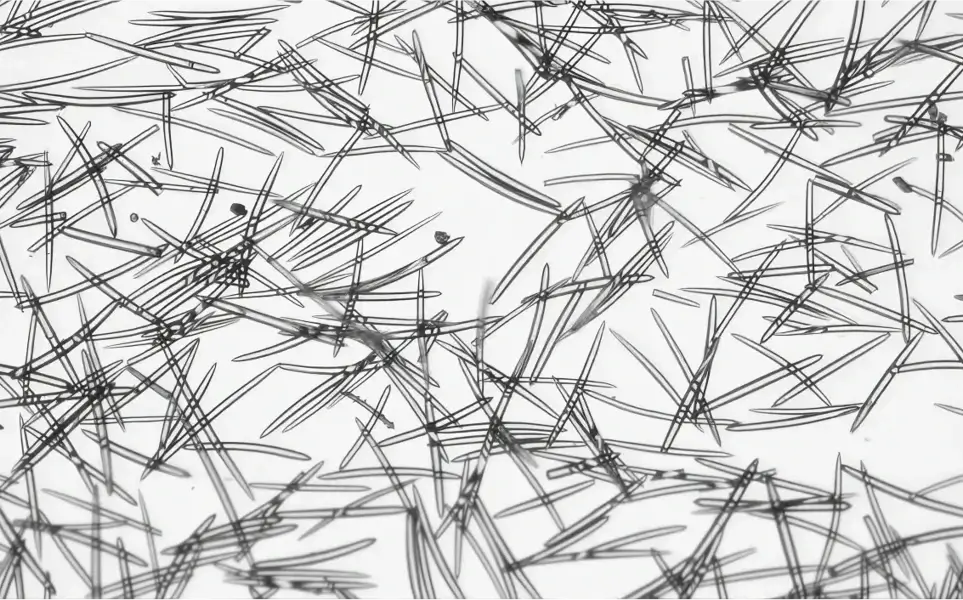
Sponge Spicule is a substance extracted from freshwater sponges. It is a fine siliceous needle‑like structure that forms the fundamental skeleton of freshwater sponges. Its chemical formula is SiO₂·nH₂O. The spicules measure 100–320 μm in length and 10–15 μm in diameter, roughly 1/3 to 1/5 the thickness of a human hair.
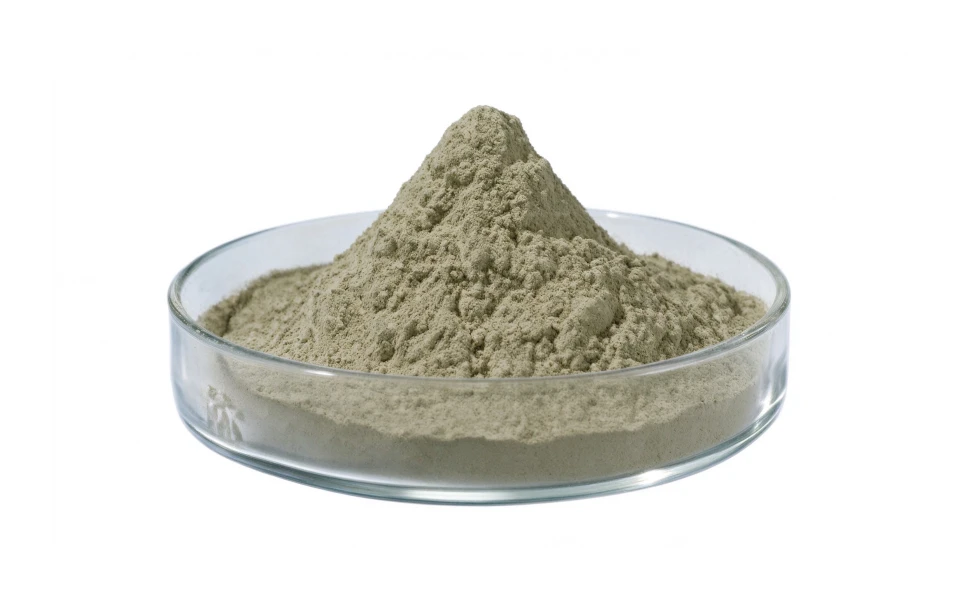
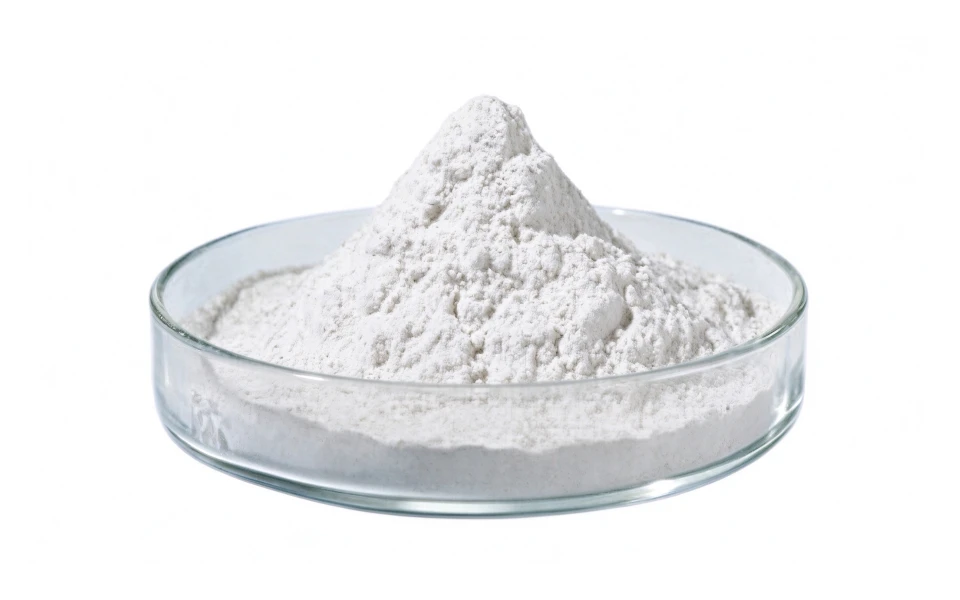
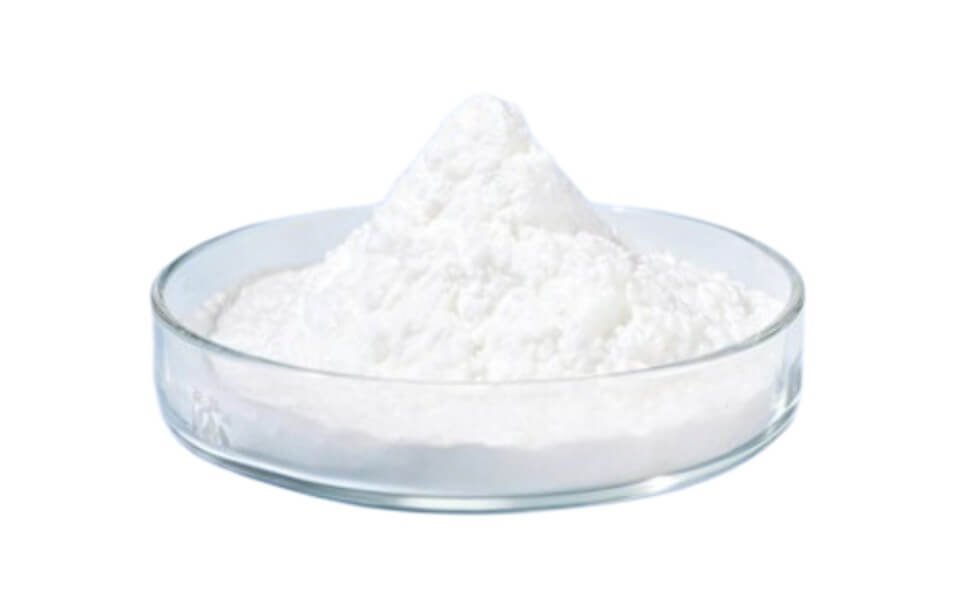
In ascending order of spicule content, the material appears brown, grey and white respectively. Under microscopic observation, the material consists of needle‑shaped micro‑silica spicules with rounded or pointed tips at both ends. Intact spicules range from 100 μm to 320 μm in length and approximately 15 μm in diameter, classifying them as natural biological microneedles.
Thanks to its distinctive siliceous needle architecture, Sponge Spicule can replace conventional metallic microneedles for skin revitalisation treatments and substitute nanoneedles for active ingredient delivery. It also overcomes the application limitations associated with traditional microneedle devices.
2.Sponge Spicule Length
Sponge spicule can be broadly categorized into three types based on microneedle length: 100 μm, 200 μm and 300 μm. With identical application technique, microneedles of varying lengths penetrate the skin to different depths, resulting in distinct primary cosmetic applications.
- 100 μm: Ideal for users seeking a gentle exfoliation experience.
- 200 μm: This depth not only aids stratum corneum renewal, but also stimulates cell metabolism in the stratum spinosum and boosts collagen production.
- 300 μm: Delivers deep cellular stimulation and activation, accelerates metabolism, reduces pore congestion, promotes collagen synthesis, and drastically shortens the natural cell turnover cycle from the typical 28 days to approximately 7 days.

| Size | Particles / g | Outer Ø | Aspect ratio | Application |
|---|---|---|---|---|
| 100 µm | 44.6M /g | 10 µm | 10 : 1 | Daily Care |
| 200 µm | 16.4M /g | 13 µm | 15 : 1 | Universal • BEST |
| 300 µm | 10.5M /g | 14 µm | 21.5 : 1 | Professional & Intensive |
3. Why Spicules are Game Changer
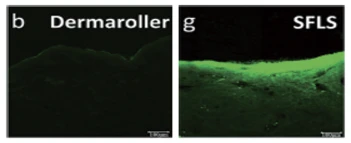
3000% ↑
Delivery of Hyaluronic Acid
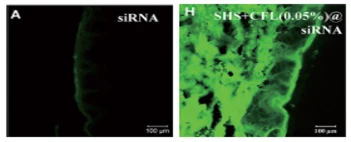
100000% ↑
Delivery of siRNA
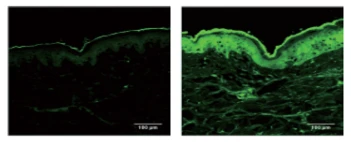
300,000+ Dal
Delivery of Exosomes
Sponge spicules (hydrolyzed sponge) excel at boosting active ingredient penetration. Experimental data demonstrates that spicule-mediated active ingredient delivery significantly outperforms alternative technologies.
- +3000% hyaluronic acid delivery vs roller microneedles
- siRNA absorption 1000× higher than passive absorption
- Supports exosome payloads up to 300,000 Da
1.Spicule-mediated transdermal delivery of pectolinarin
Kim TG · 2022 · Journal of Cosmetic Dermatology · PMID 35034416 · DOI 10.1111/jocd.14771
Natural spicule transdermal delivery study — model ingredient (pectolinarin), porcine skin, in vitro, dermal absorption 73.4% · freshwater species-matched measurement.
2.Skin retention profile of sponge spicules
Zhang Y · 2017 · Molecular Pharmaceutics · PMID 28763230
Spicule skin retention 72h+ · acting as a reservoir that keeps active ingredients present longer (animal model)
4. Traditional Spicule vs BS Spicule
We carefully source high-grade freshwater sponges from unpolluted, pristine aquatic environments. Our production workflow comprises more than 20 sophisticated refining stages, with all operations fully governed by ISO 9001 quality management standards. This stringent control guarantees every individual sponge spicule meets the highest quality specifications.
| Comparison Item | Conventional Spicule | BS Spicule |
|---|---|---|
| Raw material state | ✕ Unrefined raw material | ✓ Premium Freshwater Sponge Selection |
| Purity | ✕ 50–80% | ✓ Over 99% (23-step purification) |
| Particle Size Uniformity | ✕ Inconsistent (quality variation) | ✓ Consistent quality |
| Functional Integration | ✕ Not possible | ✓ Applicable to encapsulation technology |
| Safety Validation | ✕ Insufficient | ✓ ISO certified + human application test |
5. The history of sponge spicules
Centuries Ago
The Birth of a Natural Remedy
Sponge-based natural exfoliation methods passed down through generations for skin beauty.
1980s
German Dermatology Procedures
Professional procedures using Spicule were introduced in German dermatology clinics.
2000s
Adoption in Asian Beauty
Recognized as a natural exfoliating ingredient in the Korean and Japanese beauty industries.
2015
BS LAB Begins Spicule Research
BS LAB launched dedicated research into Spicule ingredients and cultivation technology.
2020s
K-beauty Goes Global
Spread worldwide alongside the K-beauty boom as an alternative to microneedling.
Today
Global B2B Ingredient
BS LAB, a specialist supplying freshwater sponge spicule ingredients to 50+ countries via B2B.
6. Deep Dive into Sponge Spicules
SiO2-nH2O molecular formula, SEM analysis, siliceous vs calcareous comparison
— Contact Us
QUICK INQUIRY
Please fill out the cooperation consultation form in full. Accurate information is the foundation for efficient communication and coordination. We will contact you within one business day to advance follow-up cooperation matters.