Over the past few years, bio microneedling has evolved from a niche professional treatment into one of the most discussed innovations in aesthetic skincare. As consumers increasingly look for effective yet less invasive skin rejuvenation solutions, skincare brands and treatment providers are exploring alternatives to conventional procedures that can support visible results without relying heavily on devices or extended downtime.
At BestSpicule, we have witnessed this shift firsthand. As a manufacturer specializing in hydrolyzed sponge and sponge spicule solutions, we work with skincare brands, distributors, and professional treatment providers across different markets. One thing we consistently notice is that while awareness of bio microneedling continues to grow, many people still have questions about how the technology actually works. Understanding the science behind sponge spicules is essential not only for professionals developing products and treatments, but also for anyone interested in the future of skin renewal technologies.
What Is Bio Microneedling?
Bio microneedling is a skin-renewal treatment that uses microscopic sponge spicules to stimulate the skin’s natural regeneration process. Unlike traditional microneedling, which relies on metal needles to create controlled micro-injuries, bio microneedling introduces naturally derived silica structures into the epidermis through manual application. These microscopic particles create millions of stimulation points that encourage the skin to activate its natural repair and renewal mechanisms.
The treatment is often referred to by different names, including sponge spicule therapy, liquid microneedling, and biological microneedling. Although terminology may vary between regions and brands, the underlying concept remains the same: using naturally derived spicules to promote cellular turnover and improve overall skin appearance. This approach has gained significant popularity among skincare professionals because it offers a unique combination of innovation, simplicity, and versatility. Rather than depending on complex equipment, the treatment relies on the biological interaction between the spicules and the skin itself.
What Are Sponge Spicules?
Sponge spicules are microscopic skeletal structures naturally found within certain species of freshwater sponge. Under magnification, they appear as tiny needle-like silica particles that provide structural support for the sponge. For cosmetic applications, these structures undergo extensive purification and processing to remove unwanted organic materials while preserving the unique morphology that makes them valuable for skincare use.
The resulting ingredient is commonly known as hydrolyzed sponge. While consumers often focus on treatment outcomes, professionals within the industry understand that the quality of the raw material is one of the most important factors influencing performance. Variations in sourcing, purification methods, particle consistency, and quality control standards can all affect the final product. As a result, not all sponge spicules are identical, and the manufacturing process plays a critical role in ensuring safety, stability, and consistent treatment experiences.
How Do Sponge Spicules Work on the Skin?
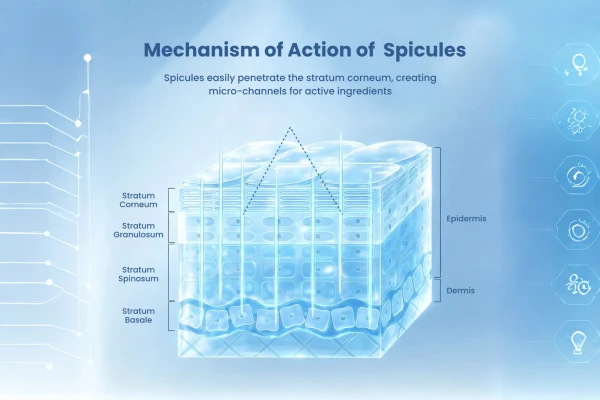
The effectiveness of bio microneedling lies in the interaction between the sponge spicules and the epidermis. During treatment, the spicules are gently massaged into the skin, where they create microscopic stimulation points. These tiny structures act as signals that encourage the skin to initiate a natural renewal response. Rather than causing significant damage, the process is designed to support the skin’s existing regenerative capabilities.
Over the following days, the skin responds by increasing cellular turnover and accelerating the replacement of older surface cells. Many skincare professionals also believe that the stimulation process may support improved microcirculation and create an environment that enhances the effectiveness of complementary skincare ingredients. While individual experiences vary depending on skin condition and treatment protocols, this biological response is what drives the visible improvements often associated with bio microneedling, including smoother texture, improved radiance, and a more refined appearance.
How Is Bio Microneedling Different from Traditional Microneedling?
Although both treatments aim to improve skin quality, the methods they use are fundamentally different. Traditional microneedling depends on mechanical devices equipped with metal needles that penetrate the skin at controlled depths. The treatment is designed to trigger a wound-healing response that supports collagen production and skin renewal. Because the procedure involves physical penetration, factors such as needle depth, device quality, and practitioner technique can significantly influence the outcome.
Bio microneedling approaches the same objective from a different perspective. Instead of creating channels with larger needles, it relies on countless microscopic spicules distributed across the treatment area. This allows skincare professionals to incorporate the treatment into a variety of protocols without requiring specialized electronic equipment. From a product development perspective, this flexibility has contributed to the rapid growth of bio microneedling in both professional and retail skincare markets. For brands seeking innovative treatment concepts, sponge spicules represent an entirely new category of active ingredient rather than simply another device-based procedure.
Why Raw Material Quality Matters
As the popularity of bio microneedling continues to grow, the market has seen an increasing number of sponge spicule suppliers and formulations. However, one aspect that is often overlooked is the importance of raw material quality. The performance of a bio microneedling treatment depends not only on formulation design and application technique but also on the consistency and purity of the spicules themselves.
In our experience working with skincare manufacturers worldwide, consistency is one of the most important concerns during product development. Brands need ingredients that perform reliably from batch to batch, while treatment providers require predictable client experiences. Achieving this level of consistency begins with strict quality control throughout the sourcing, purification, and production process. High-quality hydrolyzed sponge helps support stable formulations and more reliable treatment outcomes, which ultimately contributes to greater confidence among both professionals and end users.
Why Is Bio Microneedling Becoming More Popular?
The growing interest in bio microneedling reflects broader changes within the skincare industry. Today’s consumers are increasingly interested in treatments that support natural skin renewal rather than relying solely on aggressive procedures. At the same time, skincare brands are looking for innovative ingredients that can differentiate their products in a competitive market.
Bio microneedling aligns with both of these trends. It introduces a unique mechanism of action that stands apart from traditional exfoliating acids, retinoids, and device-based treatments. For clinics and salons, it offers a treatment concept that can be integrated into existing service menus. For skincare brands, it creates opportunities to develop distinctive formulations built around sponge spicule technology. As awareness continues to expand globally, bio microneedling is gradually establishing itself as a recognized category within modern professional skincare.
The Future of Sponge Spicule Technology
Looking ahead, we believe sponge spicule technology will continue to evolve as research, formulation expertise, and manufacturing capabilities advance. As more brands enter the bio microneedling space, the focus is likely to shift from simply offering spicule-based products to delivering better quality, improved consistency, and more sophisticated treatment experiences.
At BestSpicule, we see education as an essential part of that progress. The future of bio microneedling is not only about creating innovative products but also about helping brands and professionals better understand the science behind them. By combining high-quality hydrolyzed sponge with ongoing technical support and industry knowledge, we aim to contribute to the long-term development of this exciting category.
About BestSpicule
BestSpicule specializes in the production and supply of high-quality hydrolyzed sponge and sponge spicule solutions for skincare brands, distributors, and professional treatment providers worldwide. With a focus on quality, consistency, and innovation, we help partners develop bio microneedling products and treatment systems that meet the evolving demands of the global beauty industry.
As the market continues to grow, our commitment remains the same: providing reliable sponge spicule solutions while supporting the advancement of bio microneedling technology through expertise, collaboration, and continuous improvement.